Shirakawa-go vs Gokayama: A Local's Honest Take on Visiting Both in One Day from Takayama
A Takayama Local's Guide to the UNESCO Gasshō Villages
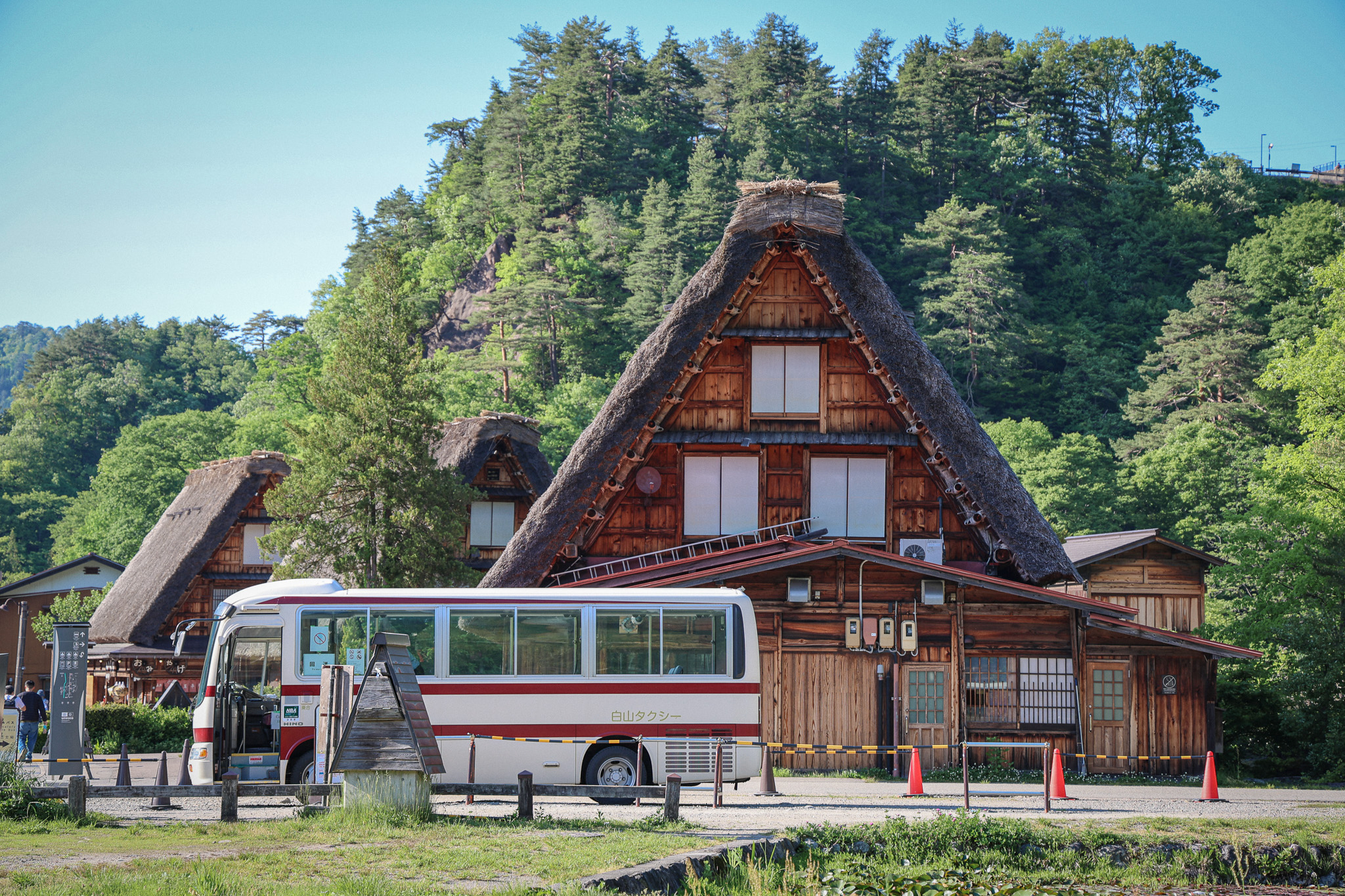

My mother said something to me once, in passing, that stuck.
"I like Gokayama better. It's smaller."
That was it. No elaboration. No comparison points. Just a quiet preference from a woman who has spent her life guiding visitors through this corner of Japan. I had been to Shirakawa-go more times than I can count — as a child, as an adult, as a guide bringing other people through. But Gokayama, somehow, I had never made it to. So one morning in May, I got in the car and drove there to see what she meant.
This is what I found.
What Are Shirakawa-go and Gokayama, Actually?
Most travelers I meet know "Shirakawa-go." Fewer know that Shirakawa-go is one of three UNESCO World Heritage villages, registered together in 1995 under the title Historic Villages of Shirakawa-go and Gokayama. The other two — Ainokura and Suganuma — make up Gokayama, just across the prefectural border in Toyama.
A few facts to ground the picture:
The three villages are connected by a single road, and you can drive between Suganuma and Ainokura in roughly 15 minutes. From Shirakawa-go, you can reach Suganuma in about 30 minutes by highway.
All three share the same architectural form — those astonishing A-frame roofs, pitched at roughly 60 degrees so that snow slides off in winter. All three were built by farming families who needed every cubic meter of attic space they could get, because the second and third floors were where the family raised silkworms. But each village has its own atmosphere. And after spending a full day moving between them, I understand why my mother said what she said. I also disagree with her, slightly. Let me explain.
My Route: Takayama → Suganuma → Ainokura → Washi no Sato → Shirakawa-go
I left Takayama around 11:30 in the morning, took the Tōkai-Hokuriku Expressway north, and arrived at Suganuma a little after noon. Total driving time from my house: about an hour.
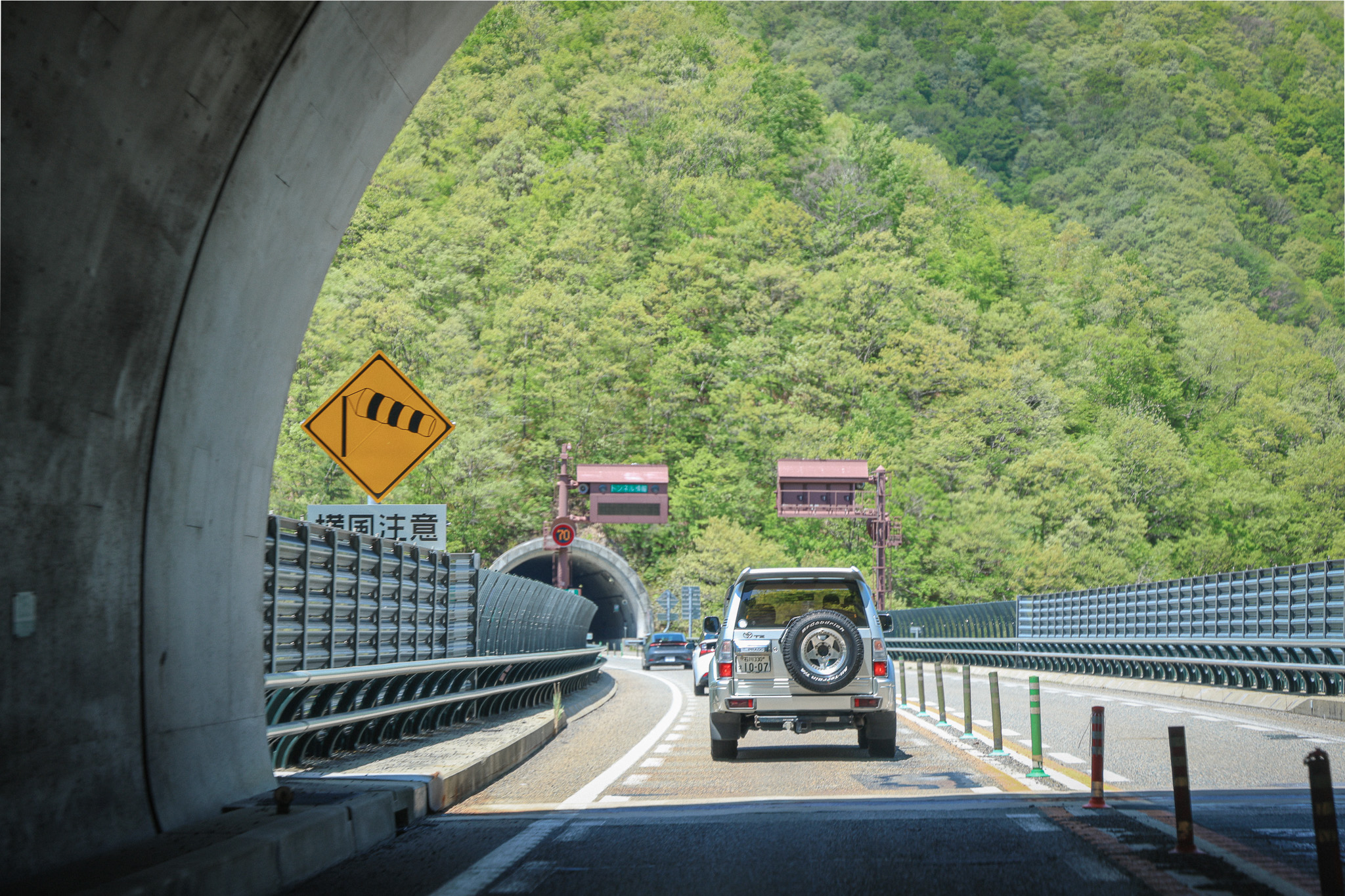
If you are planning a similar day, I would recommend the same direction of travel: start at the farthest point (Suganuma) and work your way back toward Shirakawa-go, so that you end your day at the biggest, most atmospheric village in the late afternoon when the day-trippers have left.
Stop 1 · Suganuma — The Quiet One
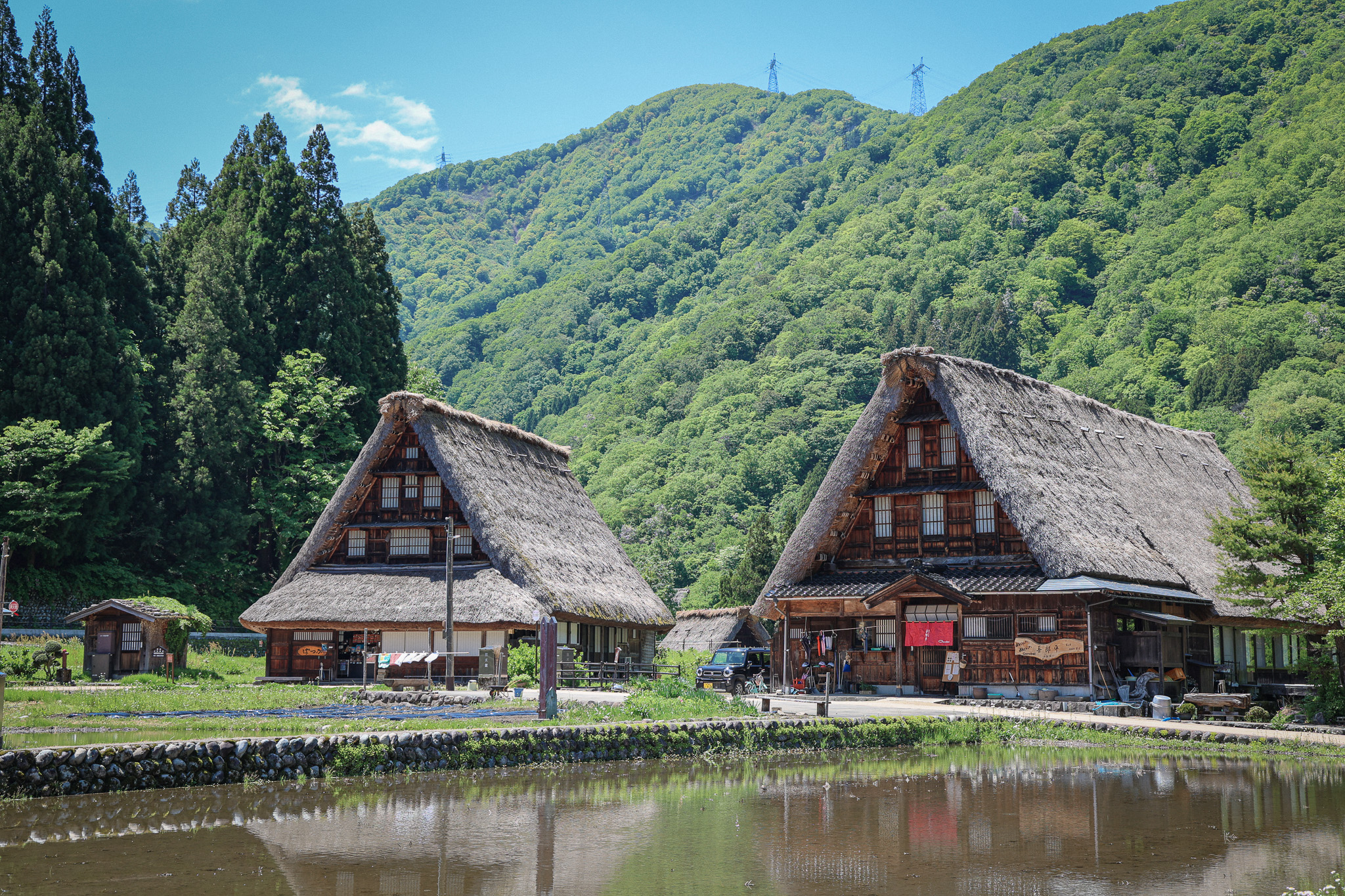
Suganuma is named for the numa, the marshes and ponds that surround it. As you walk down from the parking area on a small elevator that descends the bluff (a thoughtful touch that I noticed older visitors appreciated), the village opens up below you, ringed by water. You can feel how rich this land is — the water moves through everything.
I paid ¥1,000 for parking. There were maybe a dozen other cars. The village itself is tiny — only nine gasshō houses, a small museum, a few shops. You can walk the whole thing in twenty minutes if you hurry, or stretch it to an hour if you take your time.
What I liked about Suganuma:
- It is genuinely small. You can absorb it as a whole, the way you would a painting.
- The shop count is low, which means the commercial pressure is low. No one is calling you in.
- There were few people. On a sunny May afternoon, I had stretches where I could hear water and birds and nothing else.
- The elevator from the parking lot to the village floor means that older travelers, or anyone with mobility concerns, can visit without a strenuous walk.
This was, I think, what my mother meant. There is something honest about Suganuma. It feels like a place that happens to be a World Heritage site, rather than a place built for one.
Stop 2 · Ainokura — The Wild One
Fifteen minutes by car from Suganuma, Ainokura sits higher up, on a small plateau reached by a winding road. Parking is free. To reach the village's famous viewpoint, you hike up a path for about eight minutes.
When you arrive at the top, you see two things at once: the village itself, with its roof line of thatched A-frames laid out below, and beyond it, the Hakusan mountain range.
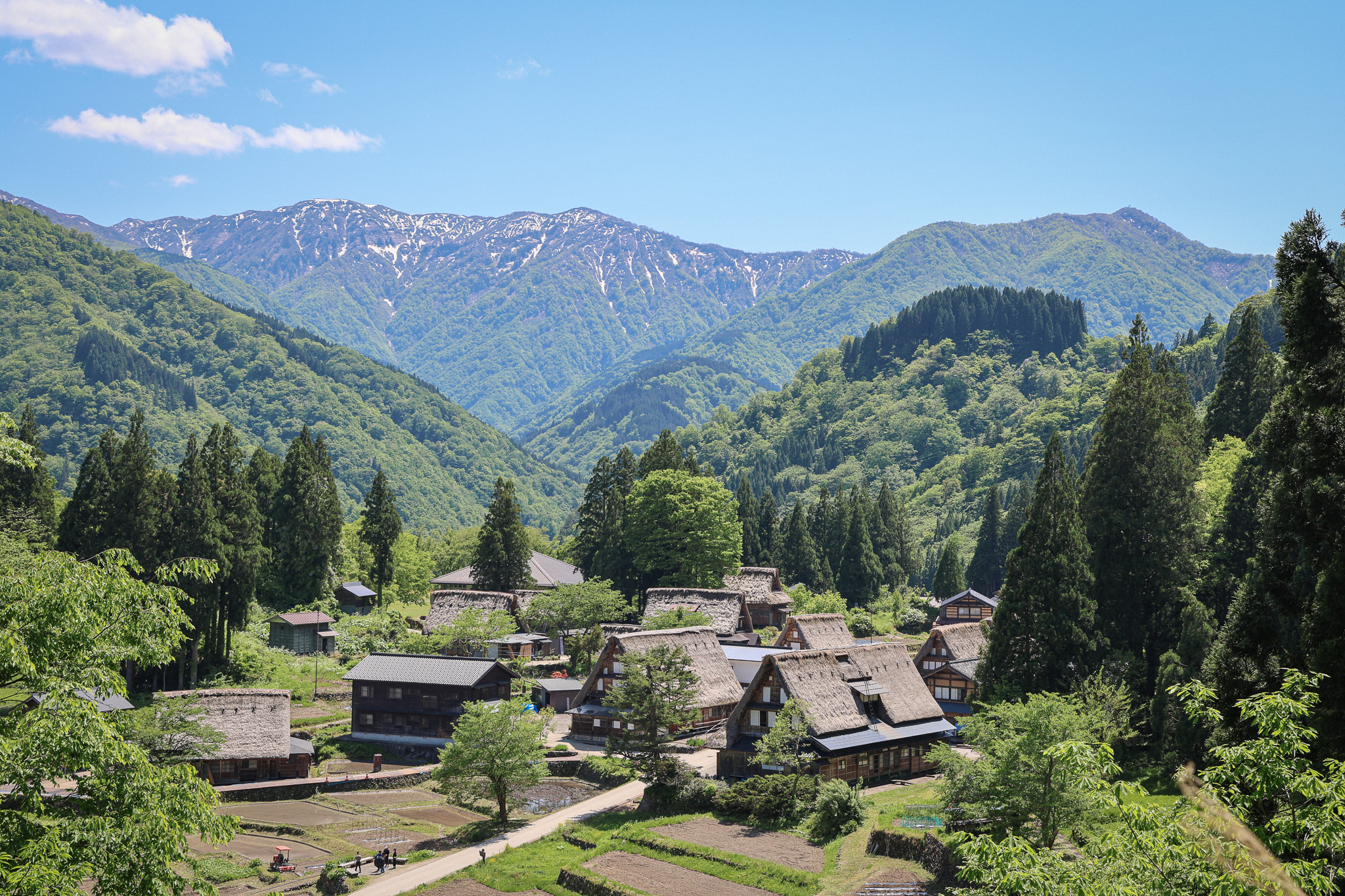
I want to pause on Hakusan for a moment. It is one of Japan's Sanreizan — the three sacred mountains, along with Mount Fuji and Mount Tateyama. If you have come to Japan and want to see something deeply meaningful in the cultural geography of the country, Hakusan belongs on the list. I visited in May, and there was still snow on the peaks. The contrast between the warm spring air on my skin and the white shoulders of the mountain in the distance was one of those moments where Japan delivers a kind of beauty you didn't ask for.
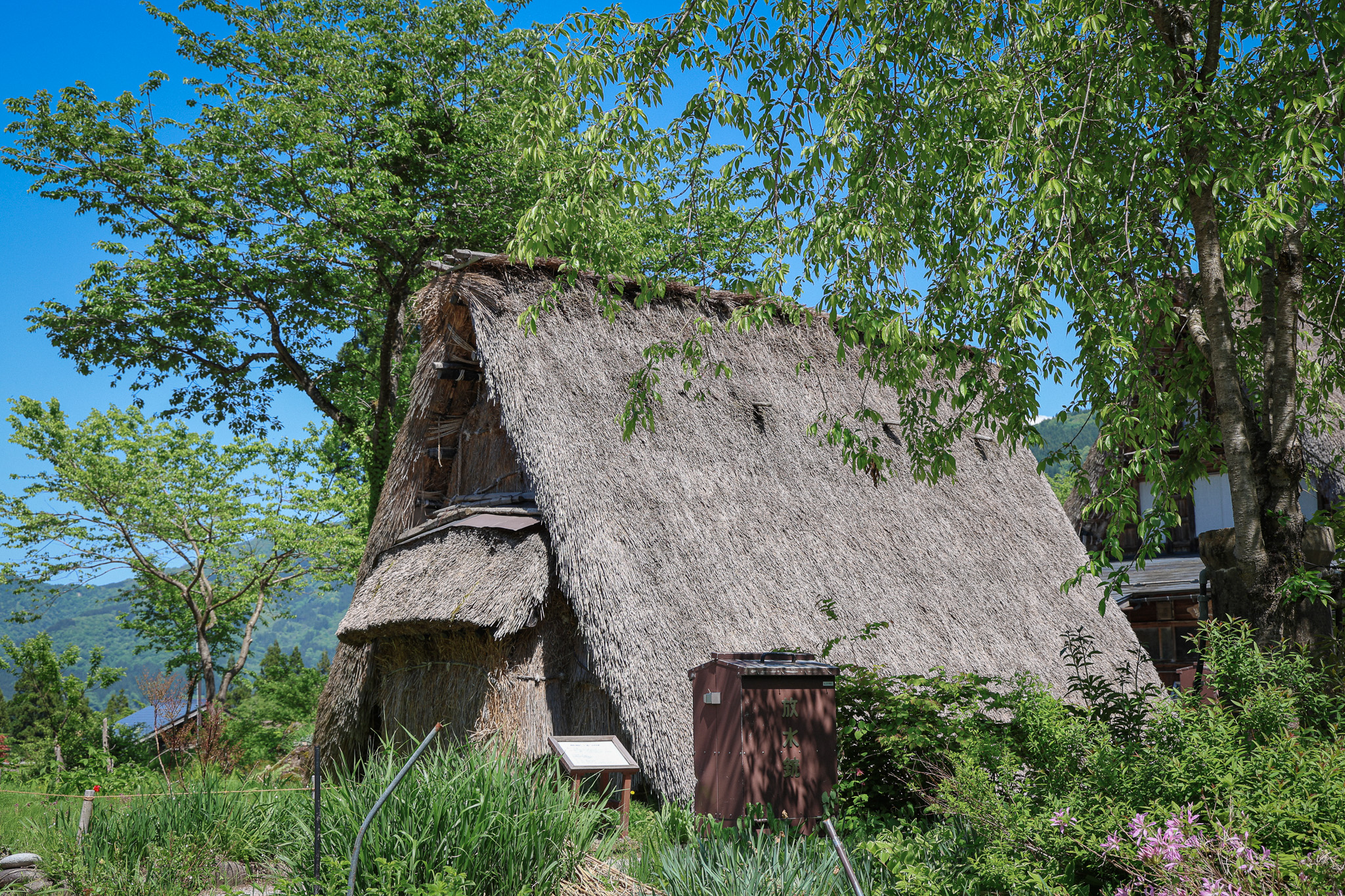
Ainokura is the larger of the two Gokayama villages — about 20 houses — but what surprised me most was how green it was. The vegetation around the buildings is dense, almost overgrown by the manicured standards of Shirakawa-go. And inside the village, I found something I hadn't seen elsewhere: genshi gasshō-zukuri, "primitive gasshō construction." These are buildings where the thatched roof rises directly from the ground, with no first-floor walls. Just roof, all the way down.
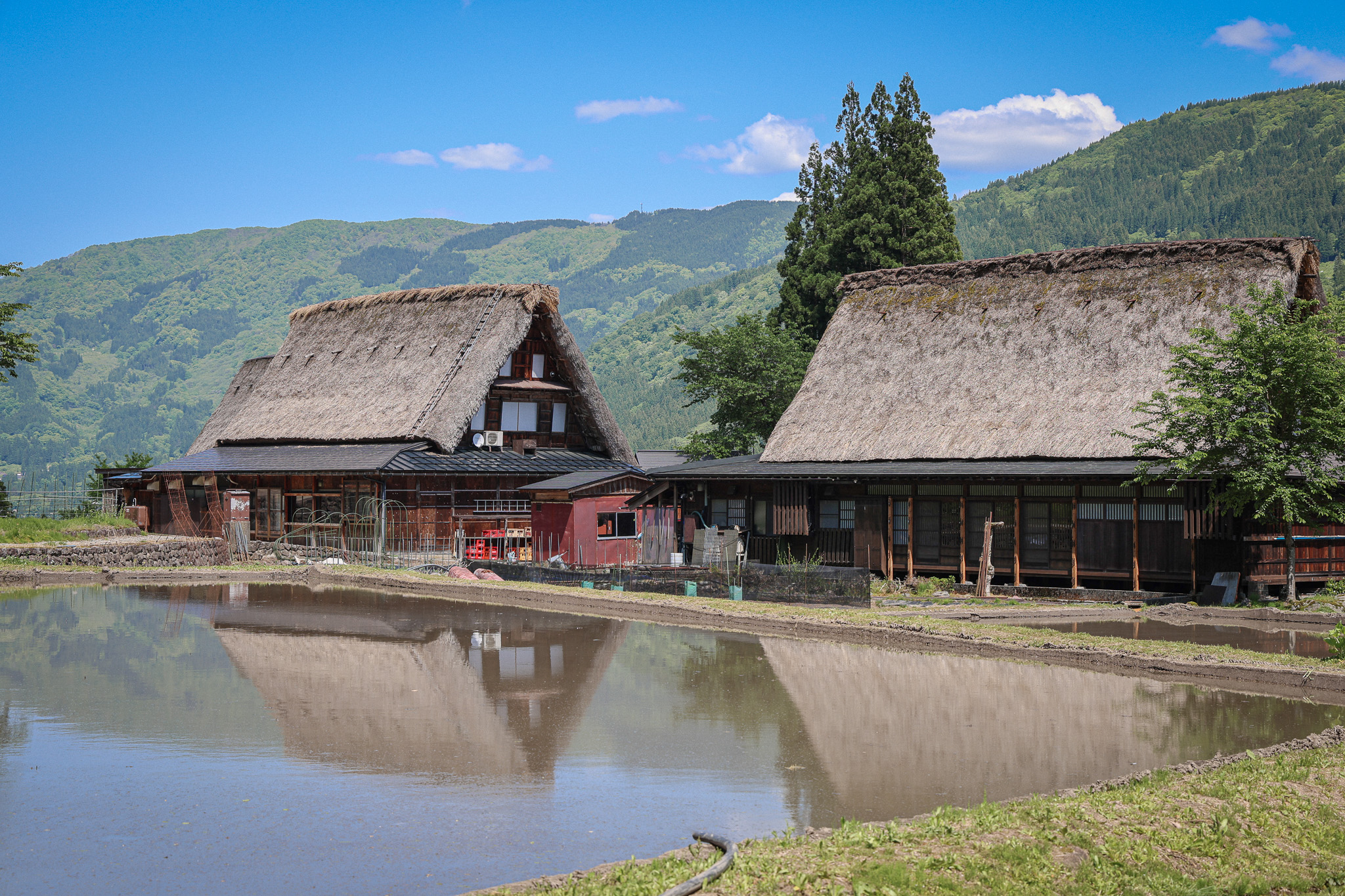
They look ancient. Rougher, more elemental. If Suganuma is feminine — soft, composed, ringed by water — then Ainokura is masculine. There is a certain wildness to it. This, I suspect, is closer to what these villages looked like before tourism, before preservation budgets, before postcards.
In Ainokura, I did a washi (Japanese paper) making experience. For ¥800, you can make your own sheet of paper, choosing what to embed in it. I picked some dried flowers and worked the bamboo screen through the pulp the way the staff showed me. The whole thing took maybe 20 minutes, and I walked away with a sheet of paper I had made with my own hands.
I had vaguely known, for most of my life, that washi was made from trees. But I realized standing there with wet pulp on my fingers that I didn't actually understand the process. I wanted to know more. So I got back in the car planning to head straight to Shirakawa-go — and that's when I saw the sign.
Stop 3 · Washi no Sato — The Detour That Became the Best Part
"Washi no Sato" — 和紙の里 — "Village of Paper" — read the road sign. I almost didn't stop. I had a plan; Shirakawa-go was waiting. But something about the word sato — that warm, old-fashioned word for "village" or "homeland" — made me turn the wheel.
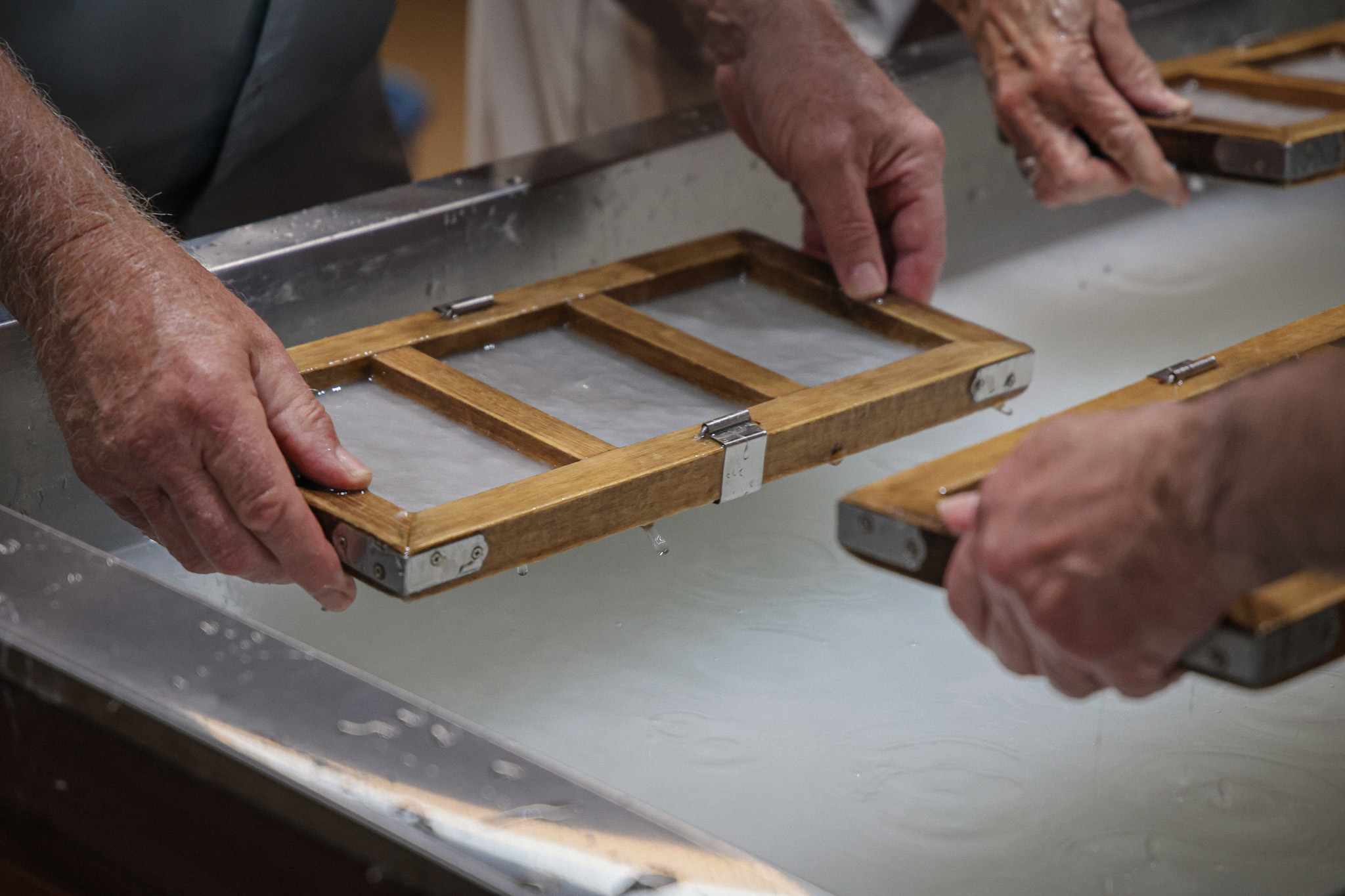
This is the part of the day I want every visitor to know about, because almost no one stops here, and they should.
Washi no Sato is a small complex tucked along the road between Ainokura and Shirakawa-go. Inside, you find:
- A clear, well-presented exhibition on how traditional Etchū washi (Gokayama's washi, one of three regional washi traditions recognized by UNESCO in 2014) is made — including, to my astonishment, the step where the paper pulp is laid out on snow to bleach naturally white in the winter sun. Snow as a tool. I stood there for a long time looking at that exhibit.
- A gasshō-style workshop building where you can do a more in-depth washi-making experience. This is where it goes beyond the souvenir version: you learn the cycle of the craft, from kōzo bark to finished sheet.
- A genuinely good shop. I don't say that lightly — most craft shops in tourist areas drift toward sameness, the same lacquered chopsticks and the same indigo dyed cloth. The shop at Washi no Sato had washi business card holders, washi lampshades, washi notebooks with covers that felt like silk in the hand. Things I actually wanted to buy.
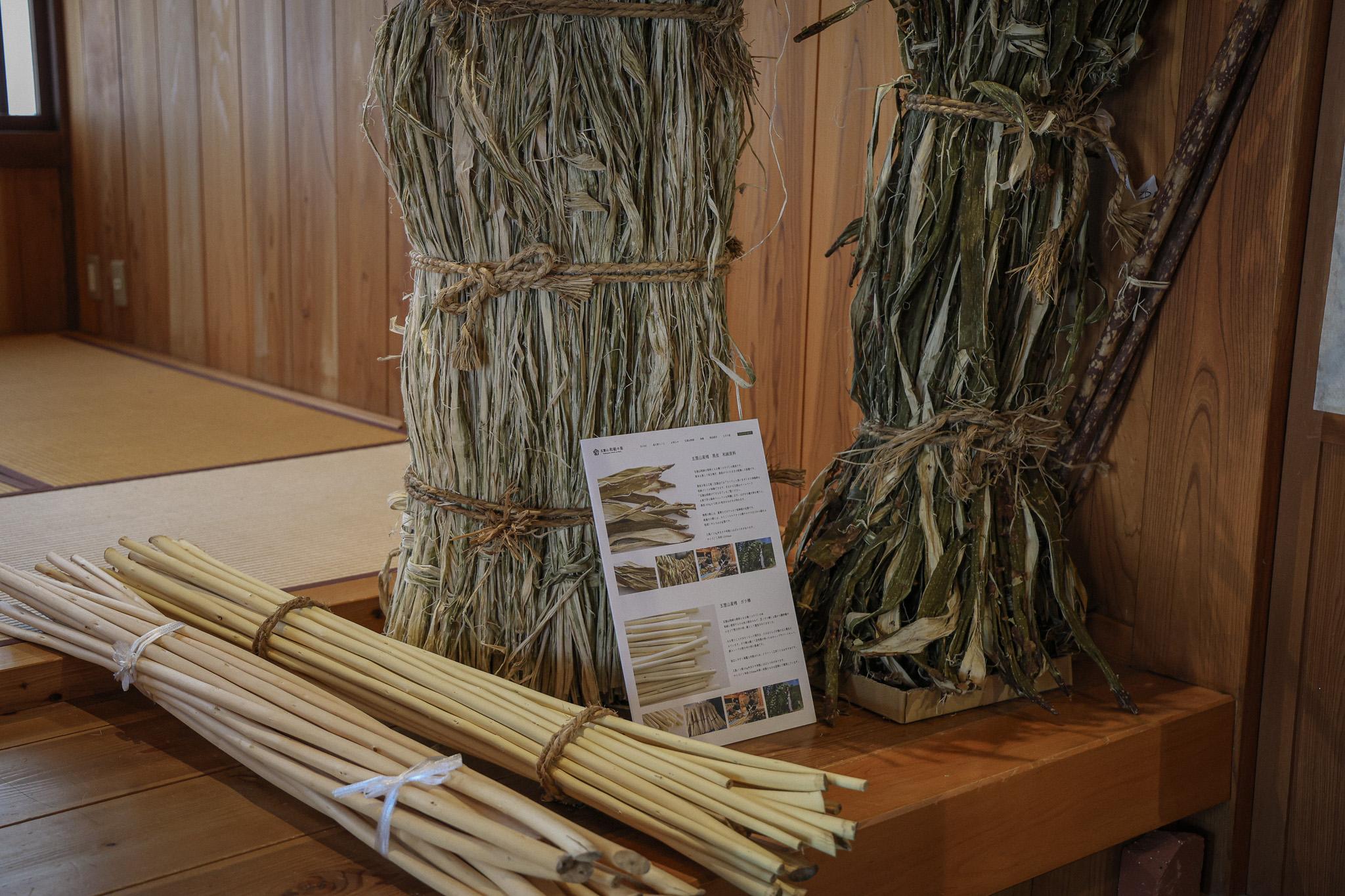
Washi is, I now understand, one of the great quiet foundations of Japanese culture. The sliding screens in old buildings. The lanterns. The pages of the books that carried our literature for a thousand years. The repair paper used in conservation work on art around the world today. All of it begins with someone soaking bark in winter water and laying pulp on snow.
If you go to Gokayama, please stop here. It is twenty minutes that will change how you look at every paper screen for the rest of your trip.
Stop 4 · Shirakawa-go — The Big One
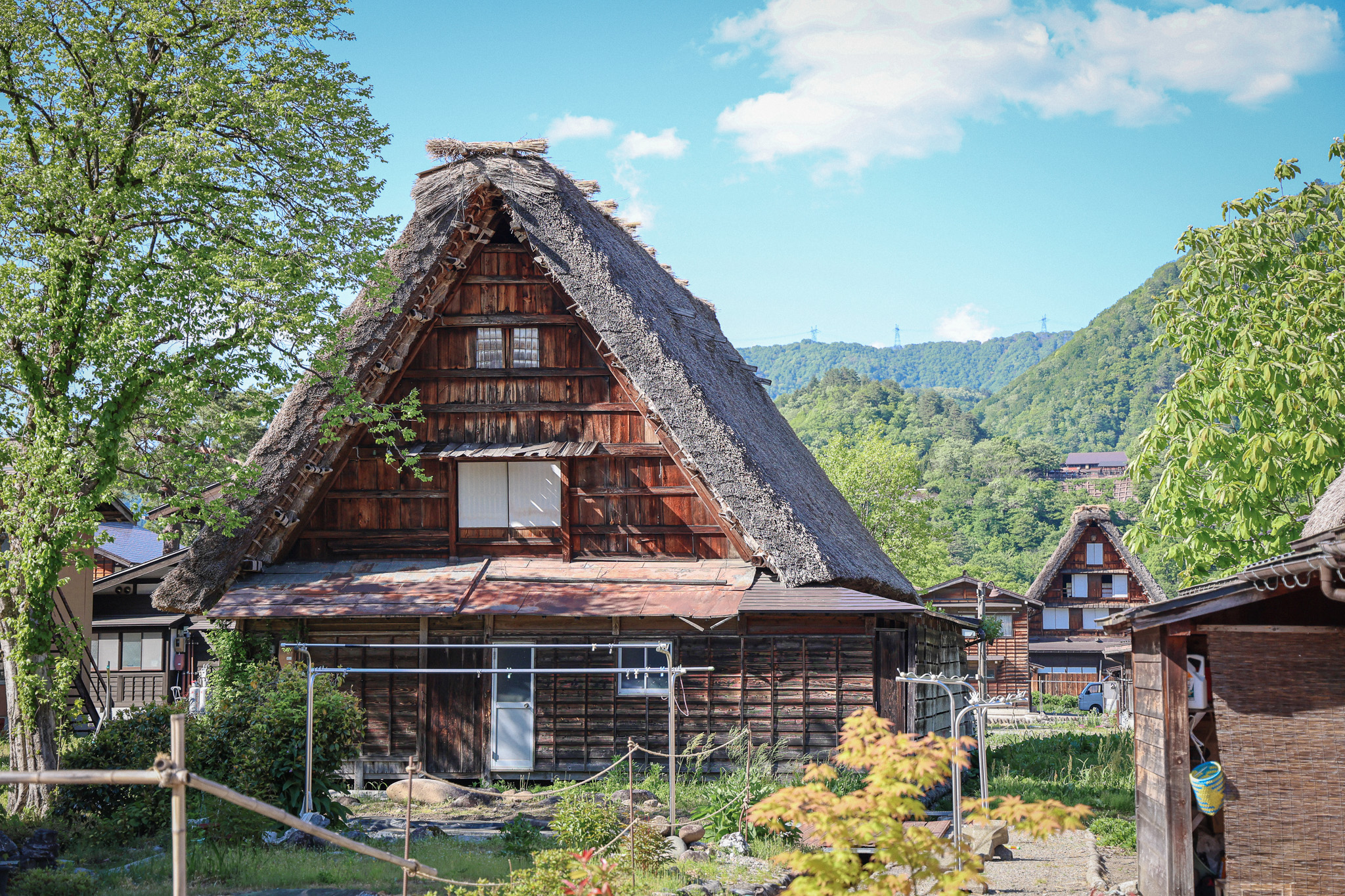
I arrived in Shirakawa-go around 3 PM. By that hour, most of the day-trip buses had left or were leaving. Many of the shops close around 2:30. The crowds were thin.
And here is the thing I want to be honest about: Shirakawa-go is still the most impressive of the three.
It is dramatically larger. Around 100 gasshō houses spread along the valley floor of the Shōkawa River, framed on every side by mountains. You can spend hours walking, and the village simply unfolds — a footbridge here, a small shrine there, a roof you turn the corner on that is somehow more beautiful than the last one.
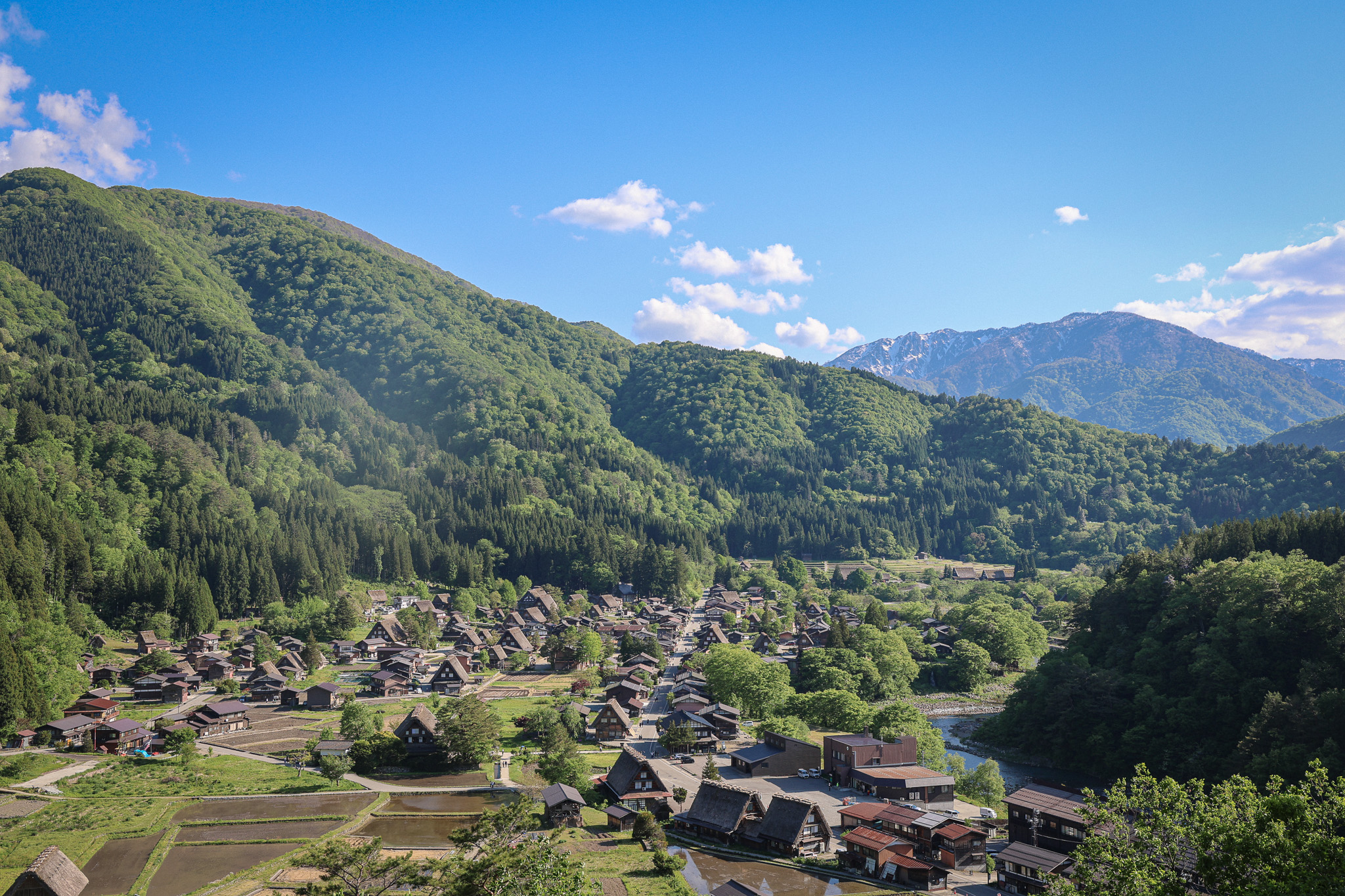
What I love about Shirakawa-go that the smaller villages cannot offer is the chance to explore. The gasshō-zukuri form is endlessly photogenic, but it changes radically depending on the angle you view it from. From dead-on, the roofs look almost like cathedrals — symmetrical, monumental. From the side, they read as long ships. Walking around a single house, finding the angle where the light catches the thatch just right, is its own meditation. In the smaller villages, you cannot get lost. In Shirakawa-go, you can — happily.
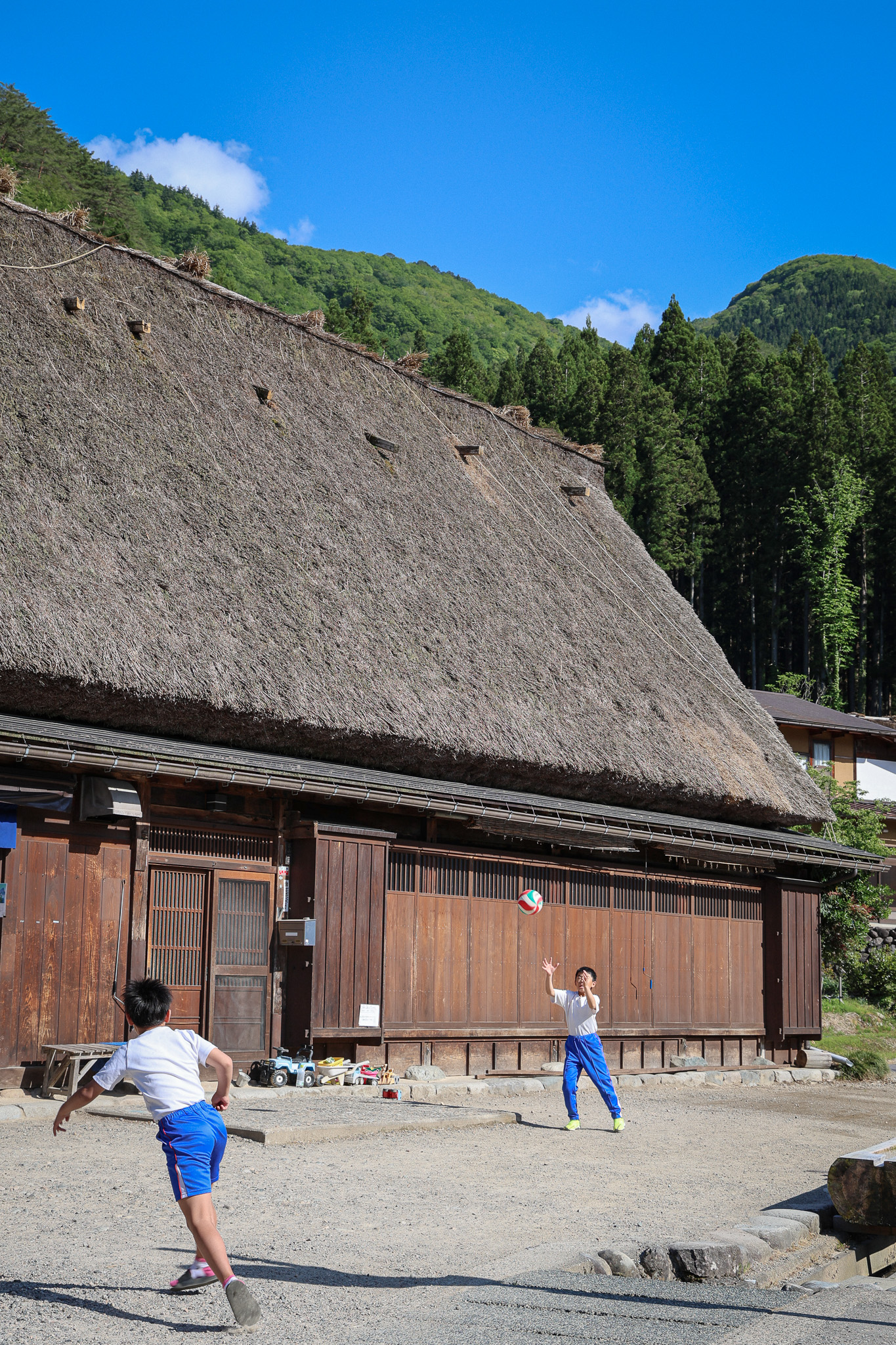
You also see, more clearly here than anywhere, that this is a living village. Children walk home from school past the World Heritage signs. Laundry hangs in upstairs windows of houses that are 200 years old. This is a place of human life before it is a tourist site, and Shirakawa-go wears that fact more openly than its smaller neighbors.
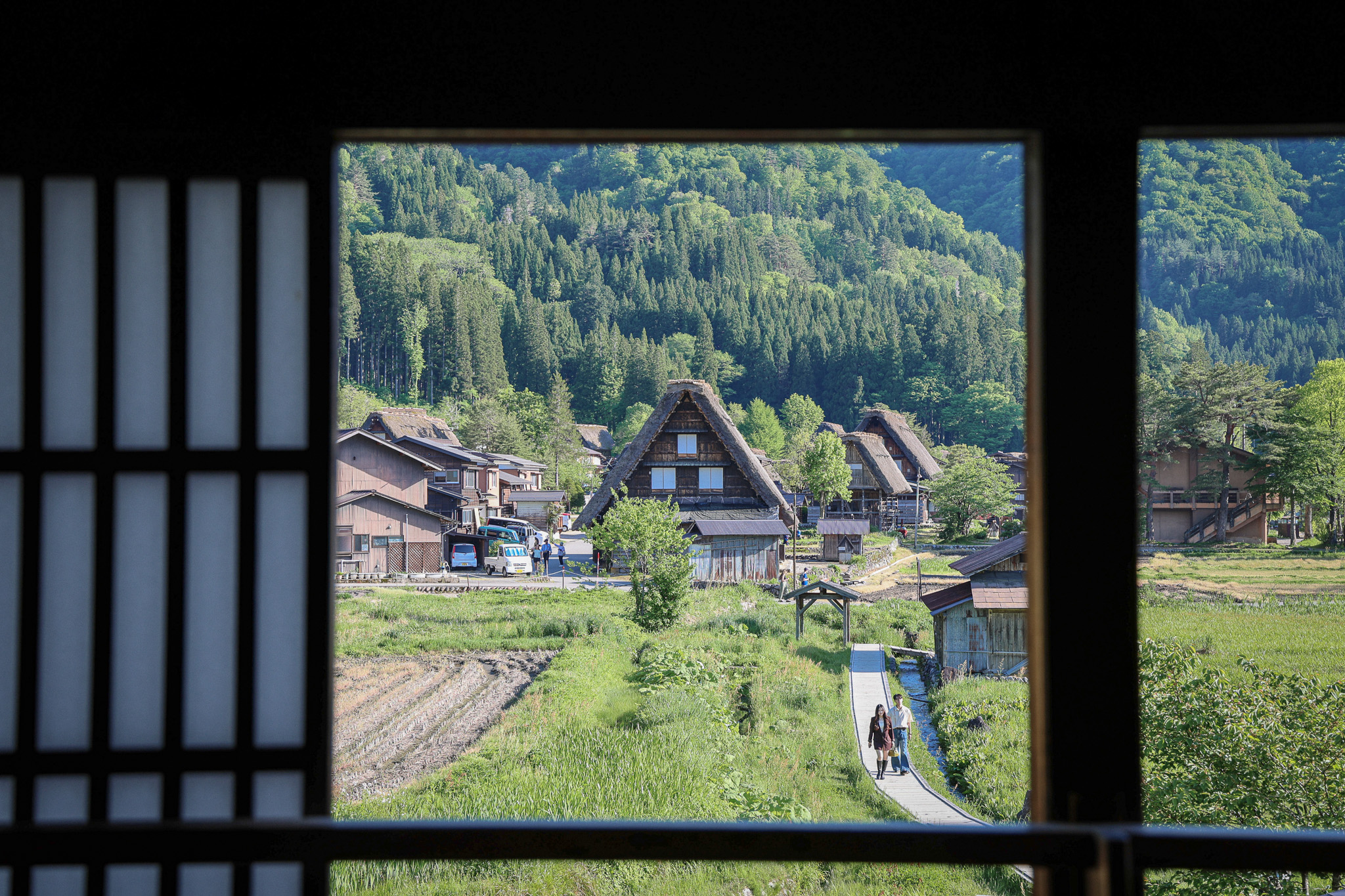
I visited the Wada House (Wada-ke), the largest and most important of the village's open-to-public houses. I'll share something here that I don't usually lead with: the Wada family is, distantly, my own family. We are related through generations far enough back that the connection means almost nothing in daily life — and to be clear, I paid my entrance fee like anyone else. But walking through the rooms of a house that shares blood with you is a particular kind of feeling, and I won't pretend otherwise.
What I found inside was better than any of that. The Wada House holds old documents — handwritten records from when the family served as village headmen under the Edo-period shogunate. The curator let me sit and read until closing time. The things I learned in those documents were among the most interesting I have ever encountered about the daily economic life of a gasshō village.
But I won't tell you what I learned. I am going to leave you with two questions instead, because I think discovering the answers yourself, in the house, is more rewarding than reading them on a blog.
Two Questions to Carry Into the Wada House
Question 1
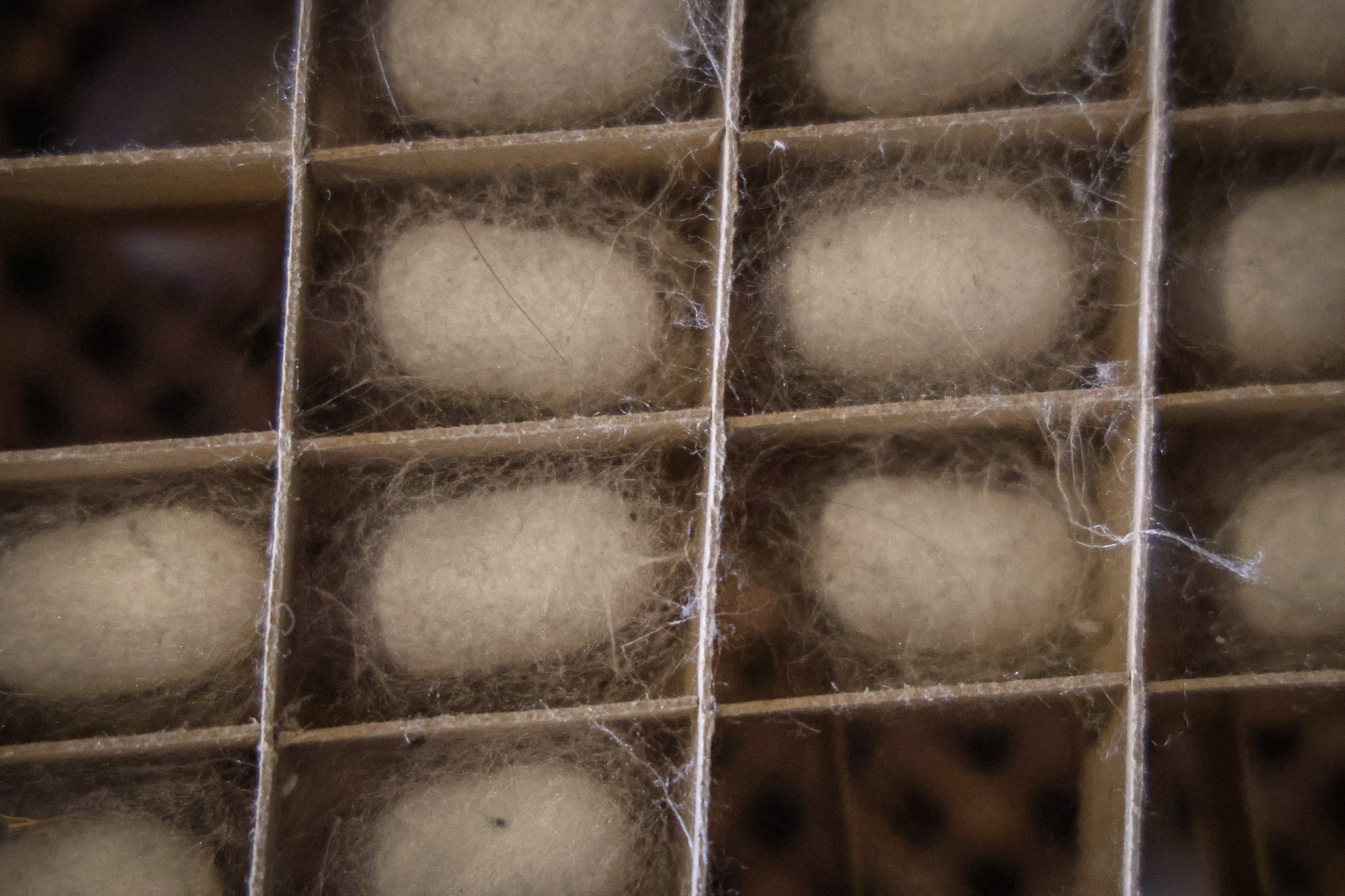
Everyone knows that the upper floors of gasshō houses were used to raise silkworms — that's the famous story, and it's true. The second and third floors were essentially industrial spaces for sericulture. But the underfloor — the dark space beneath the ground floor — was also used for production. Of something genuinely surprising. Something that connects this village to weapons, wars, and the political economy of the Edo period.
What was made under the floors of the gasshō houses?
Hint: think of what a small, isolated mountain village far from coastal trade routes might be uniquely positioned to produce. Think of what was scarce, valuable, and useful to feudal lords. Think of materials drawn from things farmers had in abundance — silkworm waste, certain plants — and the long process of soaking and refining.
Question 2
If you look at a satellite photo of Shirakawa-go, you'll notice something extraordinary. Every single gasshō house in the village is oriented in the same direction. They are not aligned randomly. They are not aligned to face the road, or the river, or the temple. They are aligned to face something else.
Why?
Hint: think about the climate. Think about snow. Think about a roof pitched at 60 degrees and how its two long sides interact differently with the elements over a year. The orientation was a survival strategy first, and the visual unity of the village is a beautiful side effect.
The answers are waiting for you in Shirakawa-go. Go find them.
The Three Principles: How This Village Was Saved
There is one more thing I want to share before getting to my recommendations, because it changed how I look at this place.
In 1971 — long before UNESCO arrived in 1995 — the residents of Ogimachi formed something called Shirakawa-gō Ogimachi Shūraku no Shizen Kankyō wo Mamoru Kai: "The Society to Protect the Natural Environment of Ogimachi Village, Shirakawa-go." They were watching their community disappear. Postwar economic change had made gasshō houses unfashionable. Younger generations were leaving. Houses were being torn down or sold off piece by piece to collectors.
So the residents made a pact. Three words.
No gasshō house in Ogimachi would be sold to outsiders, rented out, or torn down. This was a community covenant. It carried no legal force. It was, in essence, a promise.
That promise is the reason this village still exists. Without it, the houses would have been picked off one by one — bought up by Tokyo developers for resort projects, or torn down by aging owners who could no longer afford the roof maintenance (re-thatching a gasshō roof now costs between ¥10 million and ¥30 million, and is done roughly every 30 to 40 years).
In 2023, after more than fifty years, the residents began carefully relaxing the kasanai — "do not lend" — clause. The village is aging. Some houses no longer have heirs willing to take them on. The compromise: in carefully selected cases, with priority to Ogimachi residents first, then Shirakawa Village residents, then outsiders willing to commit to community life, houses can now be rented out under strict conditions. The other two principles remain absolute.
I find this story moving for a reason that has nothing to do with architecture. It is a story about a community that decided, together, that some things were worth not selling. In a country where almost everything is for sale, that decision is rare and precious.
When you walk through Shirakawa-go, you are walking through the physical result of fifty-three years of people keeping a promise.
So — Shirakawa-go or Gokayama?
If you only have time for one, the honest answer is: it depends on what you came for.
Shirakawa-go
If you want the iconic experience — the largest village, the most photographed angles, the most amenities, the easiest access by bus from Takayama or Kanazawa. You want to see the place that defines the form, and to spend three or four hours getting lost in a place that is still a real community.
Gokayama
If you want quiet. If crowds dampen your experience. If you would rather have nine houses to yourself than a hundred shared with strangers. If you are drawn to craft (the washi tradition here is exceptional), or want to see genshi gasshō-zukuri and stand on a ridge looking out at Hakusan.
But if you have the time — and a car — do not make this choice. Do all three. They are connected by a single road. You can see Suganuma, Ainokura, and Shirakawa-go in one well-paced day, with a washi-making detour in between. It is one of the best day trips in Japan, and almost no foreign visitor knows it is possible.
Practical Advice from a Local
A few honest notes on logistics:
- By bus. You can reach Shirakawa-go very easily from Takayama (about 50 minutes), Kanazawa (about 75 minutes), or Toyama. If your goal is a quick visit to see gasshō architecture, the bus is excellent. Buy tickets in advance in high season.
- By car. If you want to see all three villages, or to add Washi no Sato, you need a car. Public transport between the Gokayama villages is limited and slow. Driving from Takayama, plan for a full day — leave by late morning, return by evening.
- When to go. Honestly, any month of the year rewards a visit. Spring brings green and snow still capping Hakusan. Summer is lush and alive. Autumn turns the valley to fire. Winter — when the roofs are buried in snow and the village glows during evening light-ups — is the most postcard-perfect, but every season has its own magic. Don't wait for the "right" time.
- Crowds. Shirakawa-go is busy from roughly 9 AM to 2:30 PM. If you arrive after 3 PM — as I did — many shops will be closing, but the village itself is far more peaceful. The winter light-up events are spectacular but require advance reservations and intentional planning.
- A word about pace. Many tour itineraries give Shirakawa-go ninety minutes. That is enough to take a photograph. It is not enough to understand the place. If you can, give it half a day at minimum.
- Go with someone who knows the place. The bus version of this trip is fine. The car version with a guide who can take you between all three villages, time your day around the crowds, and translate the cultural depth of what you're seeing — is a different experience entirely. We offer private guided tours from Takayama that include all three villages, Washi no Sato, and optional onward transfer to Kanazawa.
What This Region Means, From Someone Who Lives Here
I live in Takayama, an hour from Shirakawa-go. The two places sit on the same mountain road, and people often assume they are culturally similar. They are not.
Takayama is, at heart, a merchant town. It grew rich on timber, carpentry, sake brewing, and trade with Edo. Its old streets are lined with the houses of merchants — wide façades, sliding latticework, signage. The culture is one of craftsmanship and commerce.
Shirakawa-go and Gokayama are something else entirely. They are farming villages — agrarian mountain communities, shaped by silkworms, by the gathering of plants from the forest, by winter survival. Most travelers to Japan visit cities, temples, and the occasional samurai house. They almost never see how peasants — for lack of a better word — actually lived. And even when they do see a "farming village," they usually see the modern version. The thing that makes Shirakawa-go and Gokayama so rare is that they preserve, with extraordinary clarity, what mountain peasant life looked like for centuries. That is a window almost no tourism itinerary in Japan opens.
The other thing I'll say — and this is the most personal thought I'll leave you with — is that I was unprepared for what washi did to me on this trip. I went there expecting architecture. I came home thinking about paper.
If you have any interest in Japanese aesthetics, in sustainable materials, in the long quiet civilizational threads that hold a culture together — open the washi door. A sheet of well-made kōzo paper will last over a thousand years. That is not metaphor. That is fact. Look into it.
Visit With Us
At Takayama & Beyond, we run private tours through this region for travelers who want to go deeper than a bus stop. We shape each day around what you actually care about — architecture, craft, food, photography, the snow, the silence. If your trip is taking you on to Kanazawa, we can also handle the transfer in either direction, turning a featureless train day into one of the most rewarding stretches of your journey.
Send an Inquiry